
I spend a lot of time thinking about the difference between a house that has simply been renovated and one that feels considered. They are not the same thing. As a broker, investor, and renovator, I look at a property through two lenses at once: how the home actually lives, and how a buyer will experience it the second they walk through the door. The best renovation is not always the one with the longest receipt. It is the one where every choice has a reason.
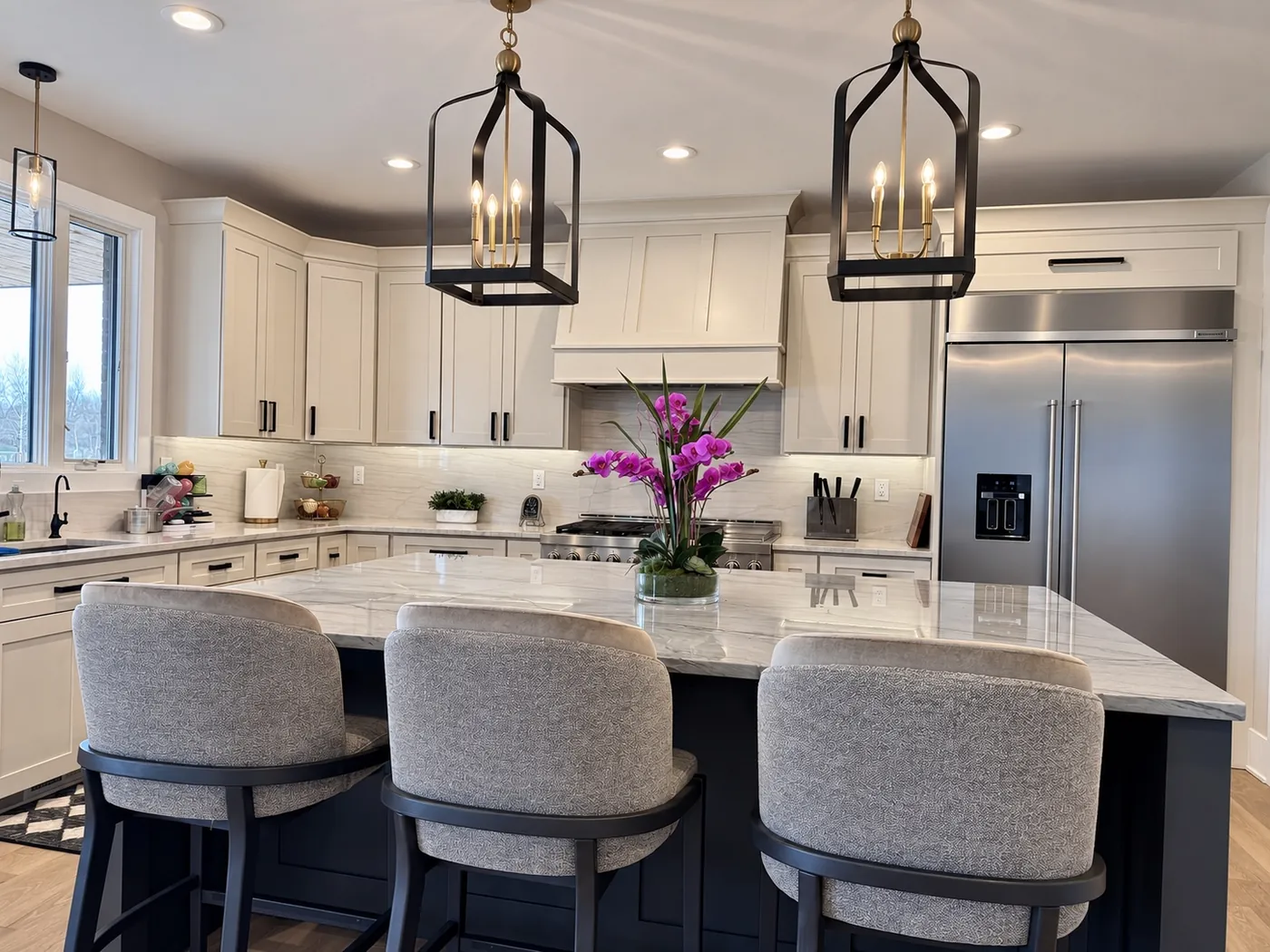
“After looking at approximately 700 paint colors, I chose essentially the same cabinet color I have in my own kitchen. Apparently originality is overrated when you already know what works.”
Start with what is staying
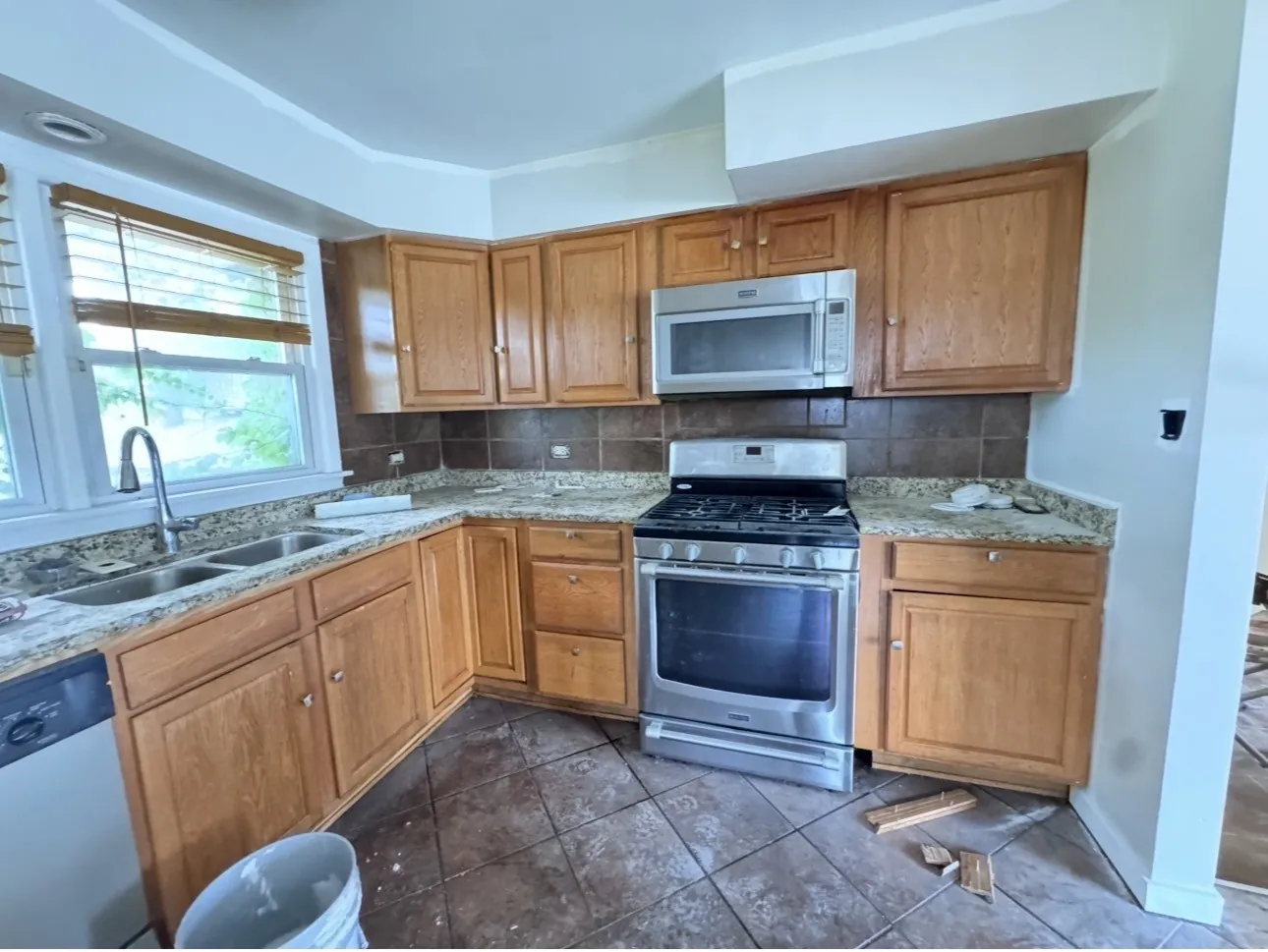
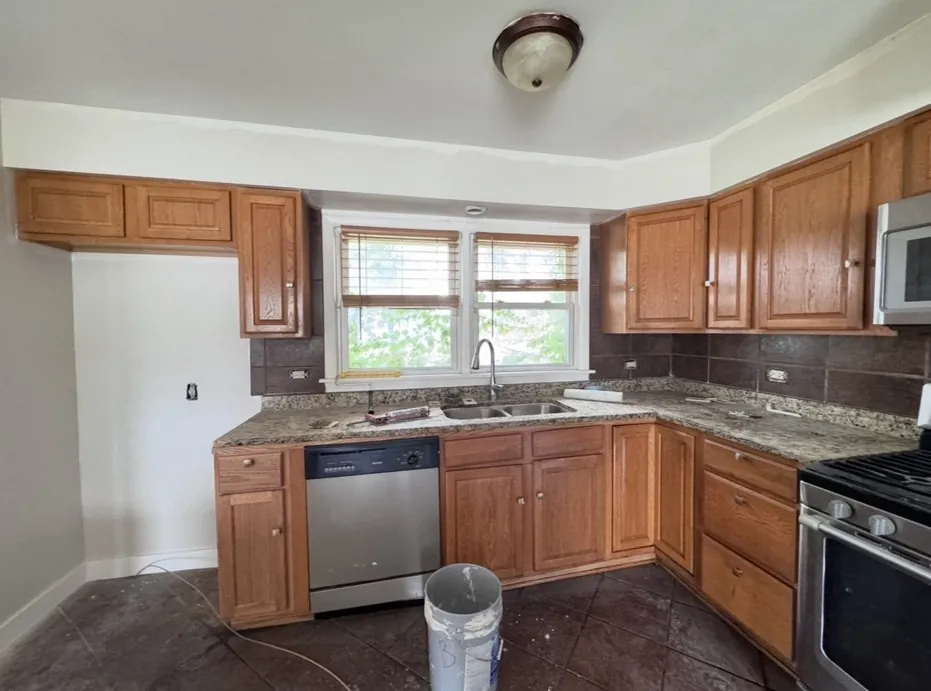
This South Holland flip is not getting a dramatic kitchen gut. The existing cabinets are staying. The granite is staying. And yes, the dark brown backsplash is staying too—despite my very strong feelings about it. The transformation has to come from the edit around those fixed elements.
That is where a smart real estate renovation strategy begins: not with a shopping list, but with an honest read of the room. What is sound? What dates the space? Which change will affect the way the whole room feels? Replacing usable materials simply because they are not new can consume a budget without creating equal value for the seller or the next owner.
Why I chose Benjamin Moore Natural Cream OC-14
Because the granite and backsplash already carry warm brown tones, a stark white would make them look heavier and more dated by comparison. A cool gray would fight the room. Benjamin Moore Natural Cream OC-14 gives us a softer answer: warm without reading yellow, light without feeling chalky, and quiet enough to let the other finishes settle down.
On the existing oak cabinets, the goal is not to pretend we installed brand-new custom cabinetry. It is to remove the orange cast, soften the visible grain, and turn the cabinets into a calm background. A satin cabinet finish offers practical durability without putting a spotlight on every small imperfection.
Warm neutral kitchen cabinets also tend to photograph beautifully because they hold their color in daylight and under warmer evening light. That matters in daily life, and it matters when the home is prepared and marketed for sale.
Let the flooring lift the room
The original dark floor and the dark backsplash were visually stacking on top of each other. Since the backsplash remains, the new flooring needs to do the opposite job. A lighter, warm wood tone will lift the room, connect more gracefully to the Natural Cream cabinets, and reduce the visual weight below the countertops.
This is also a proportion decision. In a modest kitchen, too many dark horizontal surfaces can make the room feel shorter and smaller. Lightening the largest continuous surface changes the perceived volume of the space without moving a single wall.
Black hardware with brass lighting? Absolutely.
Three finishes, three different jobs
The matte-black cabinet pulls and warm-brass lighting do not need to match because they are doing different jobs. The black pulls give the creamy cabinetry definition, repeat the darker notes already present, and keep the palette from becoming overly sweet. The brass fixtures introduce warmth and a little polish.
Mixed metal kitchen finishes feel collected and expensive when each finish has a clear role and repeats with purpose. They feel accidental when every new object introduces another metal. Here, black provides structure and brass brings warmth. The relationship is deliberate, not mismatched.
Lighting changes perceived quality faster than almost anything
Why scale, glass, and 3000K matter
Lighting is jewelry, but it still has a job to do. For this house, the fixtures coordinate without matching: warm brass, ribbed and sculptural glass, amber, milk, and clear glass used thoughtfully from room to room. The kitchen ceiling fixture can have a little personality. The pendant can be quieter. The entry light gets to make a first impression. Bedrooms can belong to the same family without looking like a boxed set.
The actual selection includes a brushed-gold ribbed-glass pendant, a soft Austwell glass flush mount, amber-glass semi-flush fixtures, a compact brass-and-milk-glass light, a clear sculptural-glass flush mount, and a wider brushed-brass fixture with a fabric shade. They are not identical, but the repetition of warm metal, rounded shapes, and interesting glass keeps the lighting story connected.
Scale, height, glass texture, and color temperature all affect how a room is perceived. A fixture that is too small makes the ceiling feel unresolved. Cold blue-white bulbs can flatten warm finishes and make a perfectly decent renovation feel harsh. We are using 3000K bulbs—warm and inviting without turning everything yellow, and flattering both in person and in listing photography.
Buyers may never say, ‘The color temperature is excellent.’ They will simply feel that the house is calmer, warmer, and better cared for. That feeling is part of perceived quality.
- Mercer41 brushed-gold pendant with a 12-inch ribbed-glass shade
- Willa Arlo Interiors Austwell glass flush mount
- Latitude Run three-light amber-glass flush mount
- Mercer41 brass flush mount with a milk-glass shade
- House of Hampton clear-glass Junathean flush mount
- House of Hampton three-light amber-glass semi-flush mount
- Ivy Bronx Hamlin brushed-brass semi-flush mount with a fabric shade
The small decisions are where the room starts to feel expensive
The actual hardware is a Franklin Brass simple bar pull in matte black, sized at 5-1/16 inches. It is not a luxury purchase. Neither is a 3000K bulb. But the scale of a pull on an older cabinet door, the consistent placement of the hardware, the height of a semi-flush fixture on an eight-foot ceiling, and the relationship between one finish and the next all change how the room reads.
Luxury real estate design is often hidden in decisions that look almost boring on a spreadsheet. Proportion. Repetition. Sheen. Temperature. The line where one floor meets another. These are the details buyers feel even when they cannot name them.
Renovation ROI is not the same as replacing everything
Spend where buyers will feel it
When I am preparing a home for sale, I am always looking for the point where additional spending stops improving the buyer's experience. Home renovation ROI is not created by making the invoice larger. It comes from putting money where it changes the first impression, the photography, the way the rooms connect, and the buyer's confidence in the property.
Could we replace the granite? Of course. Could we remove the backsplash? Absolutely. But if cabinet paint, lighter flooring, black hardware, and brass kitchen lighting can change the temperature and perceived quality of the entire kitchen, tearing out every usable element is not automatically the wiser choice.
The architecture already present should have a vote. Good kitchen updates before selling respect the scale and value of the house, the likely buyer, and the rest of the renovation. A finish that might be right for a custom home in Northwest Indiana may be an unnecessary detour in a South Holland home renovation. The standard of care can remain high without pretending every project has the same brief.
Restraint is an attribute of luxury
Luxury is not simply a price point. It is intention, proportion, restraint, quality, experience, and the accumulation of thoughtful decisions. For this project, that means spending where the change alters the experience of the house: the surfaces buyers see first, the lighting they feel immediately, the hardware they touch, and the palette that connects one room to the next.
We keep what still works. We edit what does not. That is not settling. It is knowing which decisions deserve the investment—and having enough confidence to leave the rest alone.
Luxury is not the receipt. It is the edit.
Questions homeowners ask about kitchen updates
Should you completely renovate a kitchen before selling?
Not automatically. Start with the home's price point, condition, architecture, likely buyer, and the finishes that most affect photography and first impressions. Paint, lighting, hardware, flooring, and repairs can sometimes create a stronger return than a full replacement.
Can matte-black cabinet hardware work with brass kitchen lighting?
Yes. Mixed metals work when each finish has a role and the palette stays disciplined. Black provides structure and contrast, while brass adds warmth and a more decorative note.
Why use Benjamin Moore Natural Cream OC-14 on kitchen cabinets?
Natural Cream is a soft warm neutral that can calm orange-toned wood and coordinate with stone that already has warmth. Always sample it in the actual room and review it in daylight and evening light before committing.
This article is general information, not legal, tax, lending, inspection, architectural, engineering, or municipal advice. Requirements and market conditions can change; verify details with the appropriate qualified professionals.
A better renovation begins with the right edit
Selling, renovating, or building something new?
I help homeowners, sellers, builders, and renovation-minded clients decide where to invest, what to leave alone, and which details will make the greatest difference in how a home lives—and how it is ultimately marketed.
Talk with Kelli